Overview
This site presents a long-term project to model real election results and the latest opinion polls using party list proportional representation. Many other valid (and potentially more effective) implementations of PR, but this site focuses on party list proportional using the D'Hondt method only - and compares the results with the current system: First past the post. One benefit of this method (especially "District" or "County" based constituencies) is that it retains three features which are preferred by the British public: (1) One person, one vote on a single ballot paper; (2) elected representatives which are connected to geographically-relevant constituencies; and (3) much less reliance on tactical voting.
This page shows election maps for the UK divided into, in order, constituencies which are derived from districts of strictly 4-7 member constituencies, historic counties (based on election maps from the Electoral Calculus site), and finally the countries and regions used as constituencies in former British elections to the European Parliament (which also used party list PR with the D'Hondt method!). In the left (on browser) or first set of (on mobile) tiles are labelled seat maps In the right (on browser) or second set of (on mobile) tiles are seat total maps. At the bottom of this page, there is an in-depth rationale for switching to PR in the UK.
Seat names
District
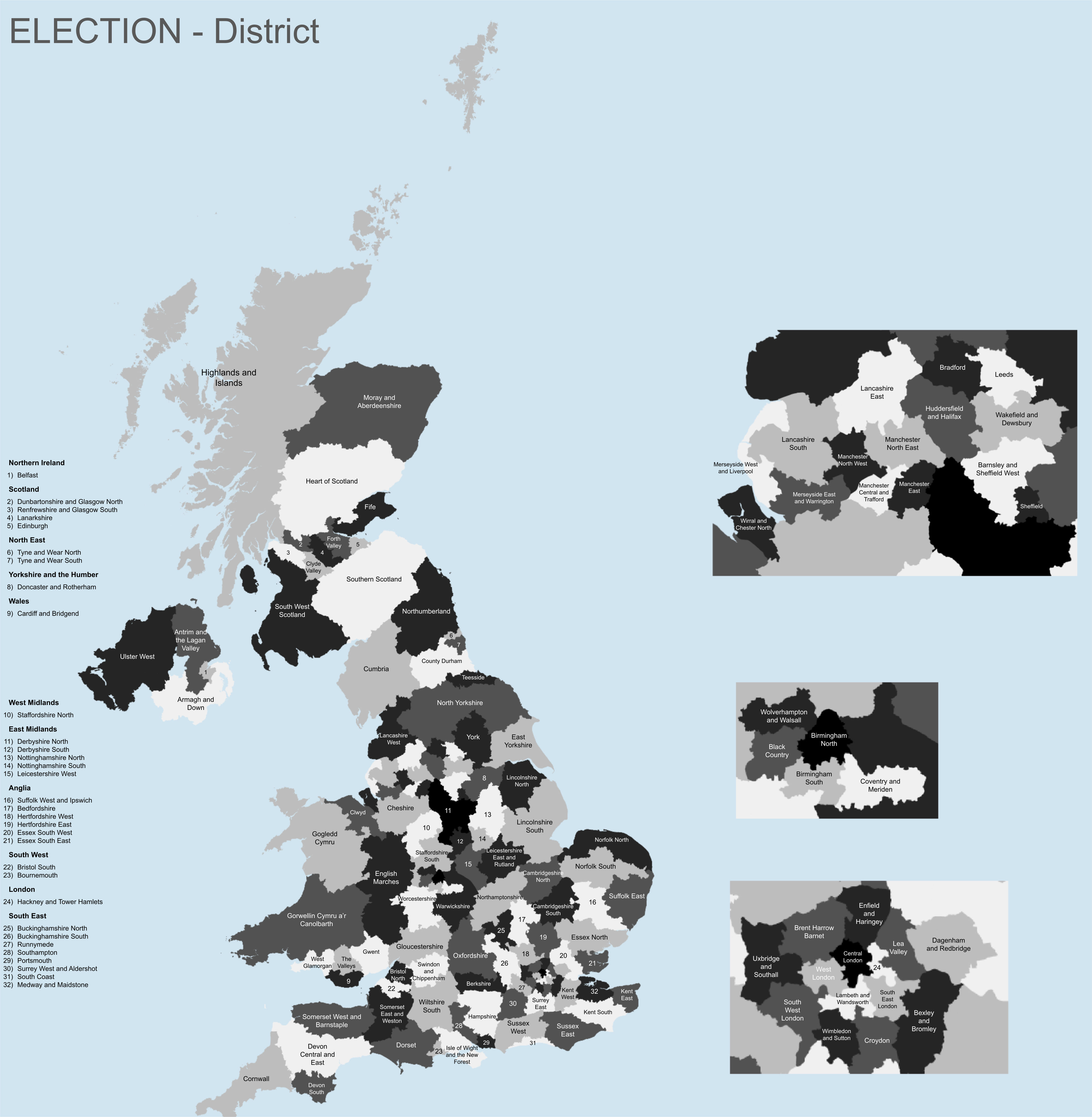
Constituencies: 125 (avg. seats/const. = 5.2)
Largest constituency (area): Highlands and Islands
Smallest constituency (area): Hackney and Tower Hamlets
County
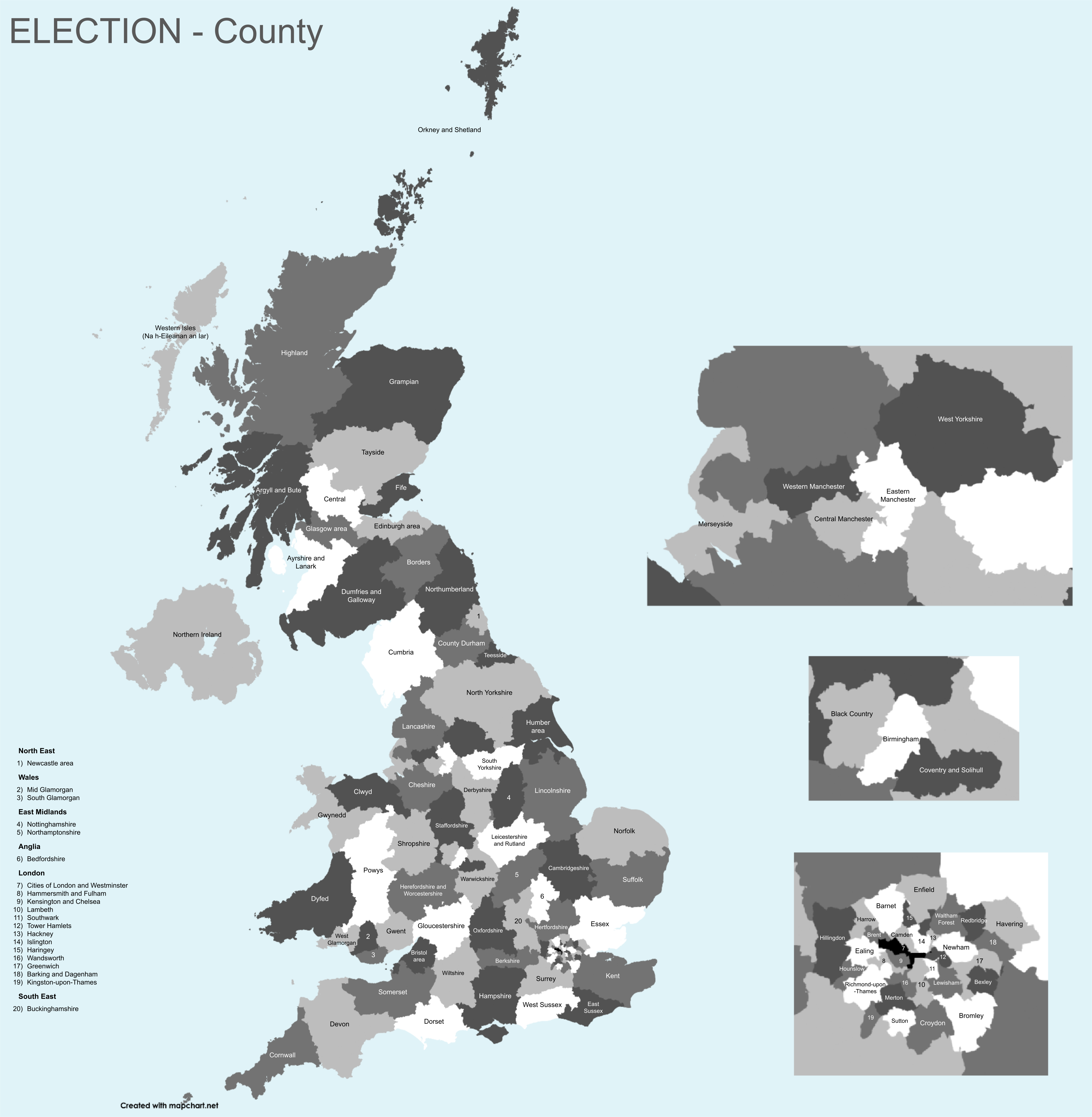
Constituencies: 102 (avg. seats/const. = 6.4)
Largest constituency (area): Highland
Smallest constituency (area): Hackney
Region
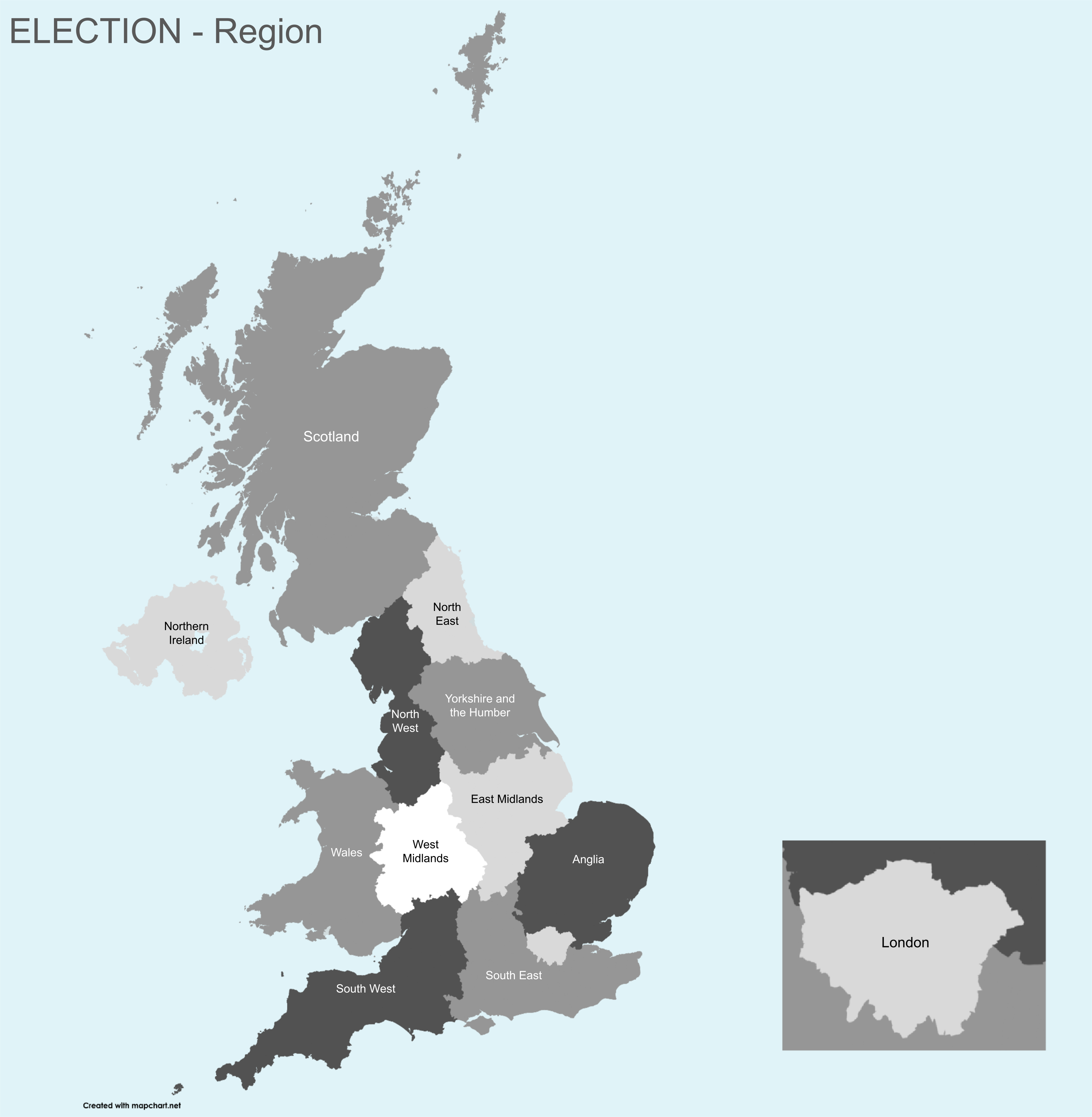
Constituencies: 12 (avg. seats/const. = 54)
Largest constituency (area): Scotland
Smallest constituency (area): London
Seat maps
District
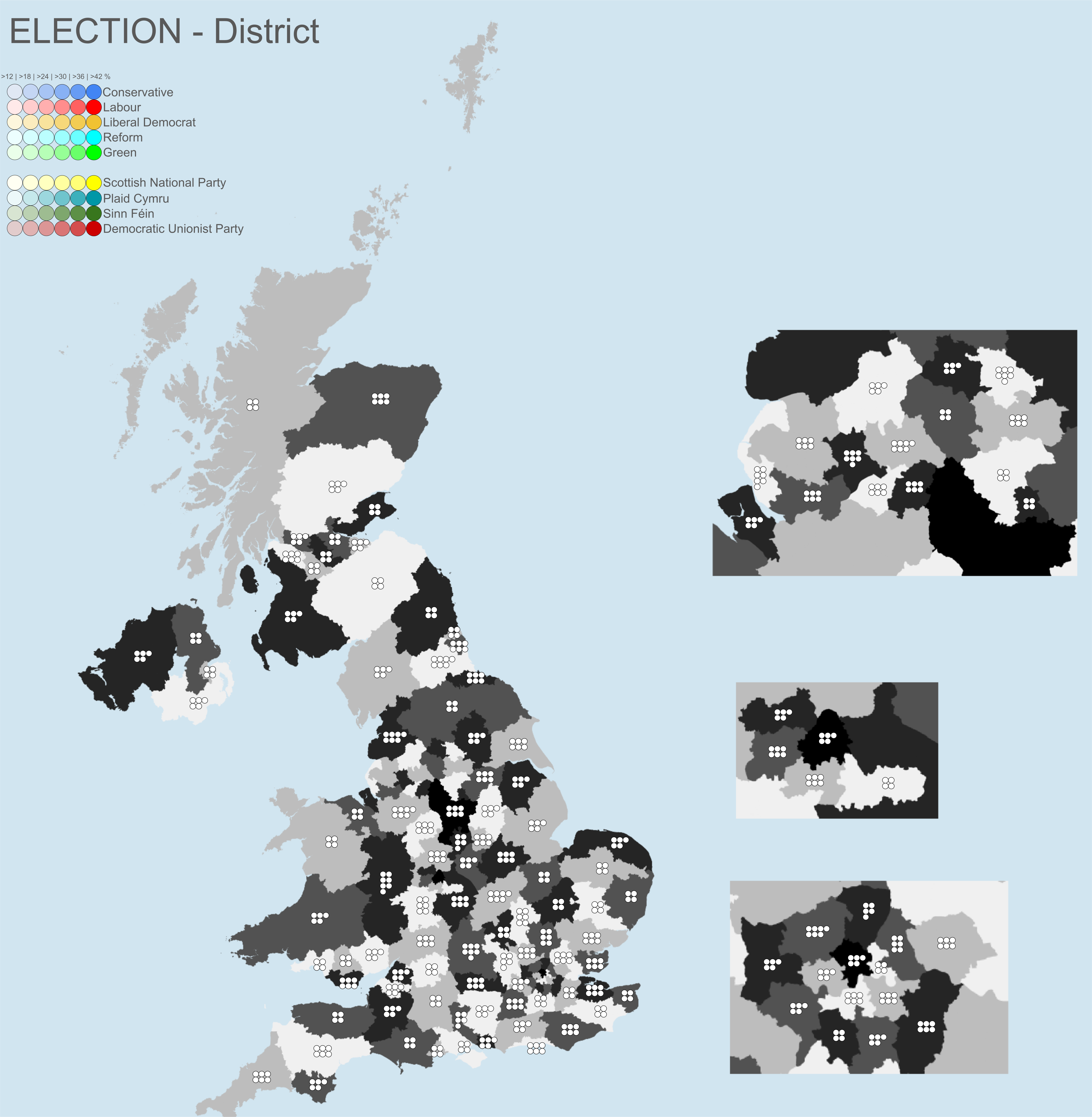
Largest constituencies: 11 including County Durham, English Marches, Leeds (7 seats)
Smallest constituencies: 37 including Belfast, Clwyd, Southern Scotland, Surrey East (4 seats)
Similar countries using these constituencies:  ,

County
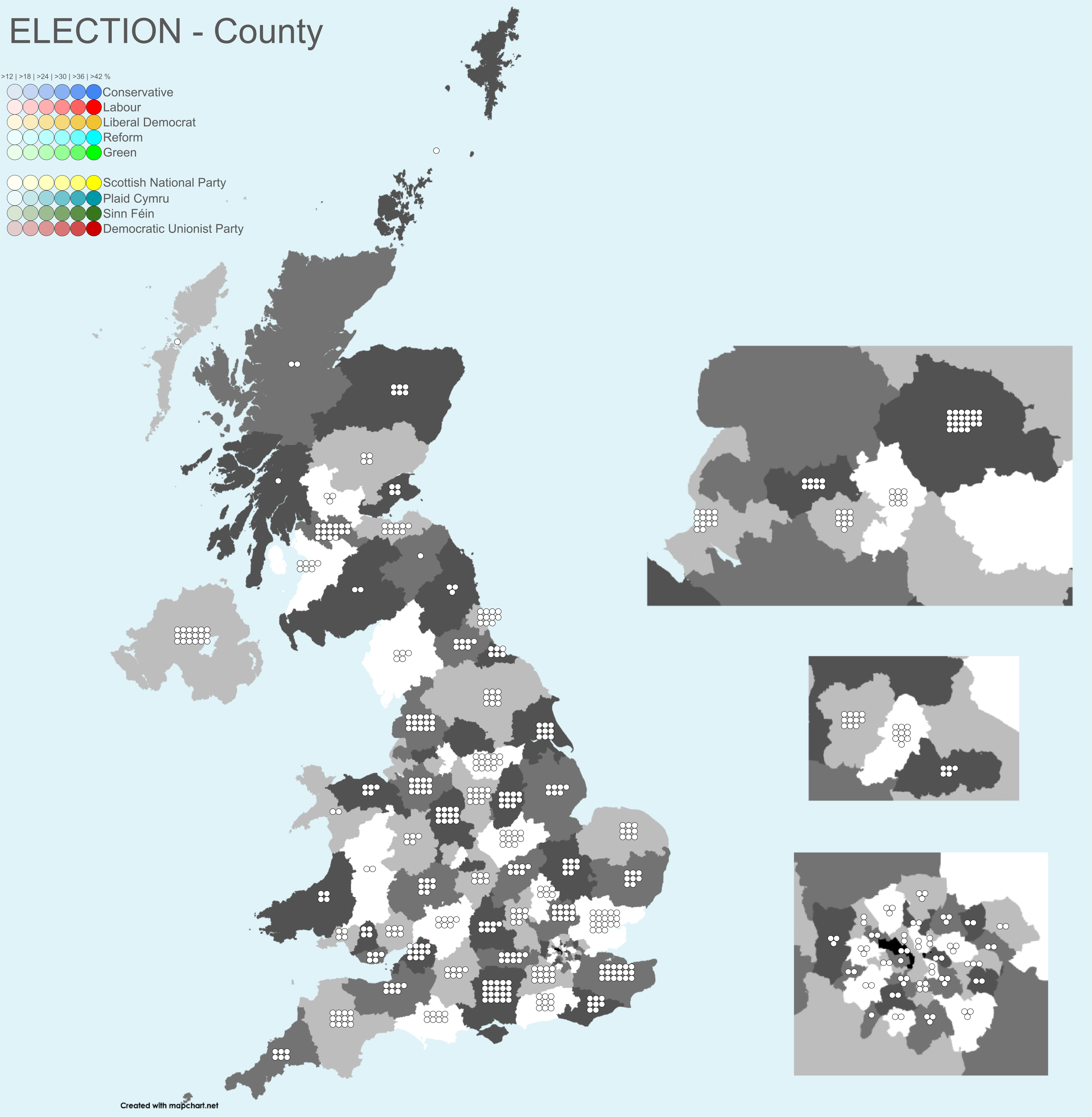
Largest constituency: West Yorkshire (22 seats)
Smallest constituencies: Argyll and Bute, Kensington and Chelsea, Kingston-upon-Thames, Orkney and Shetland, Scottish Borders (1 seat)
Similar countries using these constituencies:  ,
 ,

Region
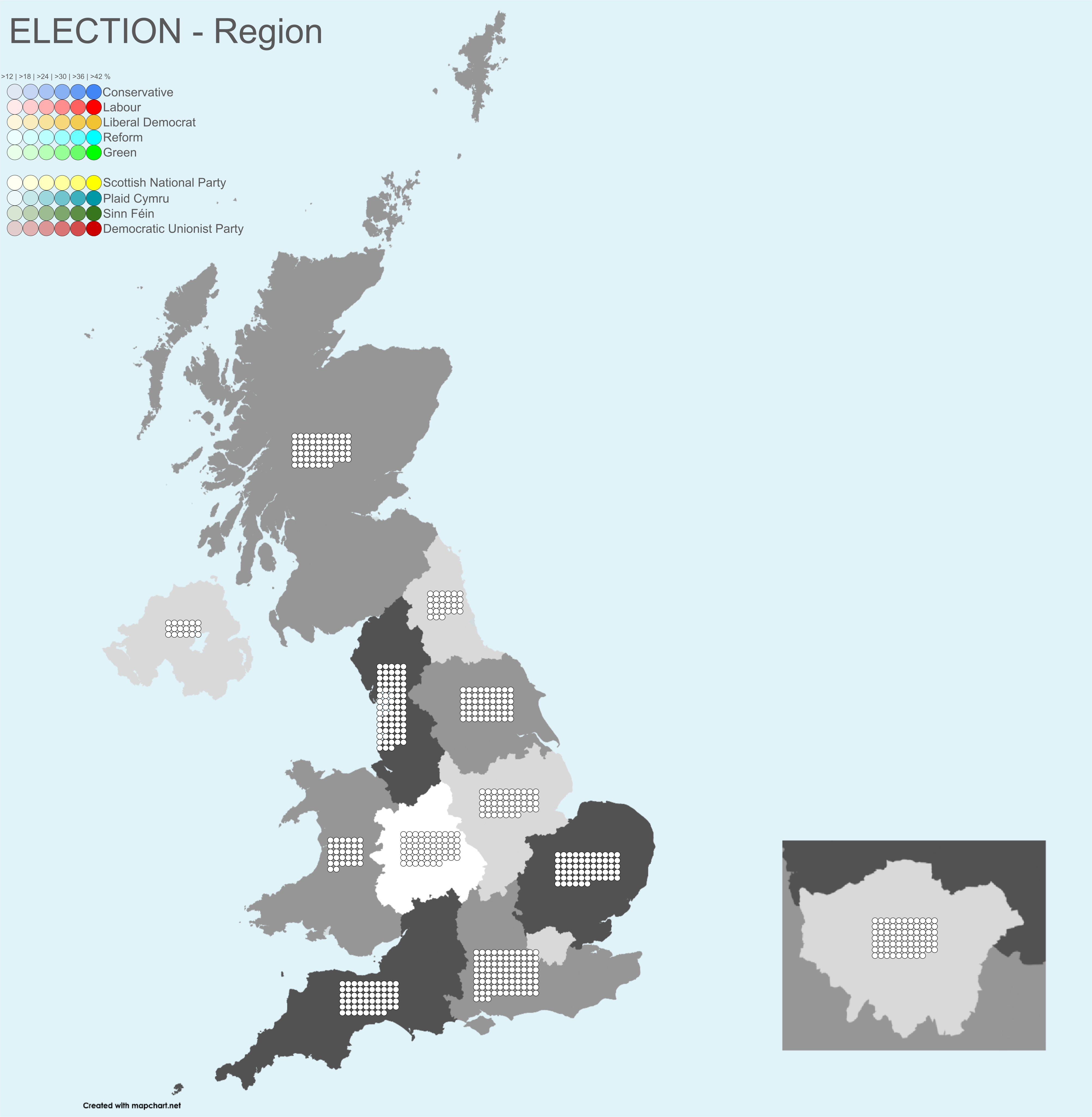
Largest constituency: South East England (92 seats)
Smallest constituency: Northern Ireland (18 seats)
Similar countries using these constituencies:  ,
 , formerly
 @

Rationale
British democracy consistently evolves with the times, as is the nature of our unwritten constitution, to suit the needs and hear the voices of all the people. In the current system members of parliament are elected to a lower and upper house. The lower House of Commons is made up of 650 single-member constituencies. Whoever receives the plurality of votes in a constituency gains a seat in parliament. In an extreme example, Belfast South was won by just 24.5% of the vote in 2015 — reflecting less than a quarter of that constituency’s preference. In the upper House of Lords, all members are appointed for life - giving the public no say on the members of the upper house who scrutinise legislation. A system where large governing majorities are won by around 40% of the vote, and where one house is completely unelected, immediately seems unrepresentative.
There have been many studies into implementing a form of PR at individual elections (1998, 2015, 2019), but not how one method would have shaped the face of British politics over time. We use historical General Election data to model previous elections as if they were conducted through proportional representation in multi-member geographical constituencies. This page also examines proposals made by the Cameron-Clegg coalition, and later discussed by the Brown Commission and Labour party, to reform the House of Lords to a mostly-elected chamber.
The scripts and data used to generate these results can be found, reproduced, and ran through this GitHub repo (Embedded tool coming soon!)